Skip to content
  • 1 – The Magician:

    March 25, 2026
    Basics, Dreams/Oracle/Divination, Tarot

    The Alchemist of Willpower

     The Fool’s Journey Through the Major Arcana, Part 2 of 22

    (everything stated in this blog is based upon my own research, personal practice, and opinion)

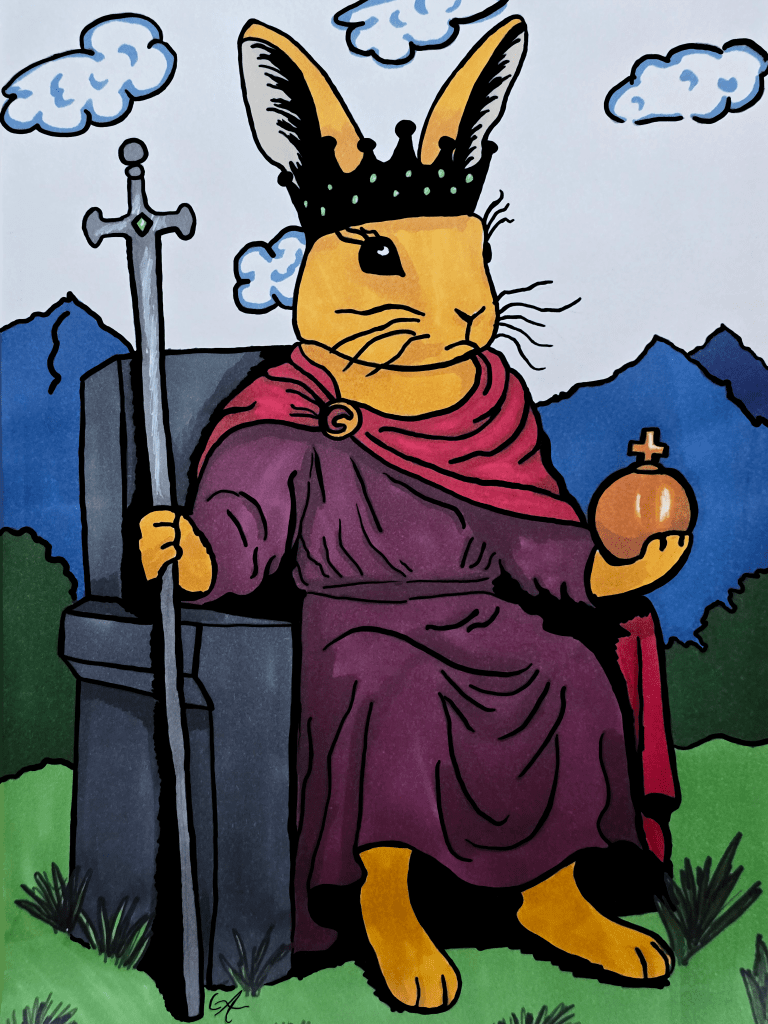
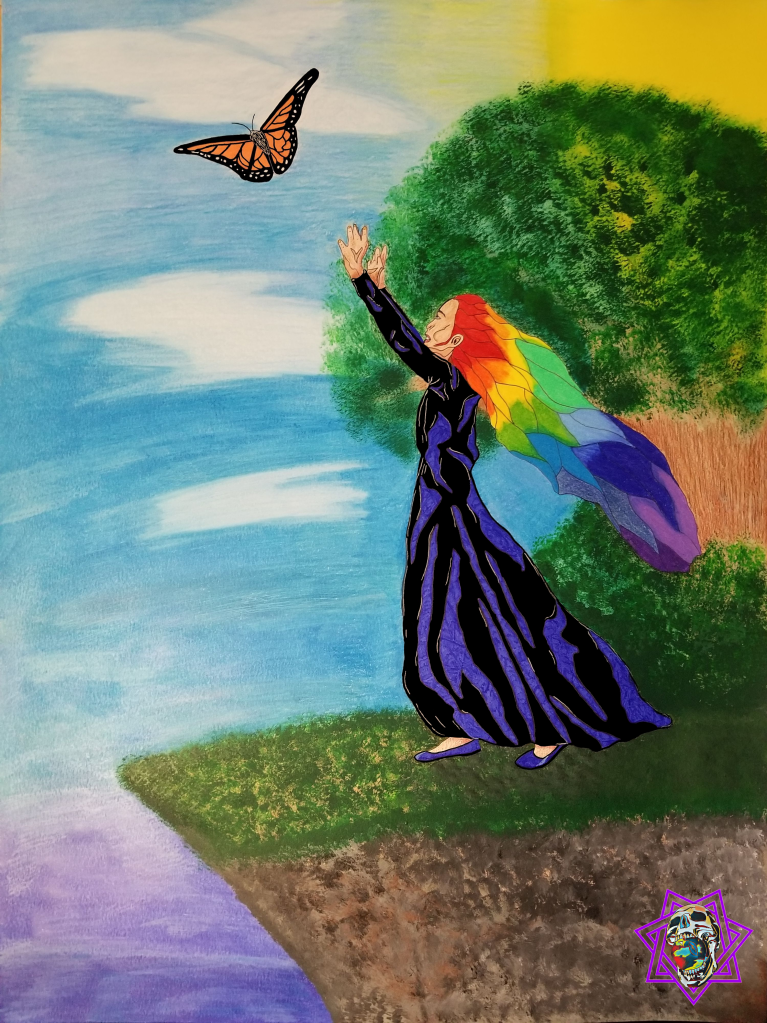
    (The Magician: from the upcoming Tarot of Perception)

    There is always a moment, right after the initial leap, where everything changes tone. In the beginning, there is openness, instinct, and that raw willingness to step into something unknown. It feels expansive. It feels alive. It carries a kind of effortless momentum that makes everything seem possible. Alas, that state does not last, and it is not meant to. The journey does not unfold in possibility alone, but in what you do with it. That is where The Magician emerges.

    The Magician does not deal in potential. He deals in application. He lives in the space where ideas stop being exciting and start becoming demanding. Where intention asks to be translated into structure. Where desire has to prove itself through repetition. This is not a dramatic shift, but it is a decisive one. It is the moment where you realize that thinking about something and building something are entirely different processes. One is expansive, and the other is exacting.

    At his core, The Magician is the archetype of will made functional. Not will as force. Not will as intensity. Not will as pushing yourself to exhaustion. Will as direction. Focused energy applied deliberately, consistently, and with awareness. He does not scatter himself across every idea that feels interesting. He does not chase every spark that catches his attention. He selects, and then he commits. That is what defines him. Not how much he can imagine, but how much he can execute.

    Execution is where friction lives. It is where you confront limitations; not just external ones, but internal ones like distraction, inconsistency, doubt, and avoidance. The Magician does not remove these things. He works through them. He understands that the act of creation is not smooth. It is iterative. It requires adjustment. It requires patience. It requires the willingness to stay engaged even when the initial excitement has long since disappeared.

    This is where attention becomes the central mechanism. Where your attention goes, your energy follows. Where your energy goes, something develops. This is not abstract. It is observable. If your attention is fragmented, constantly shifting, and/or pulled in multiple directions, what you create will reflect that fragmentation. Shallow progress, unfinished work, and scattered outcomes litter the path. If your attention is focused, sustained, and intentional, something different begins to happen. Depth forms. Continuity builds. Results start to stabilize. The Magician understands this at a fundamental level. He does not treat attention as something passive. He treats it as a tool. Something to be directed and managed. In a world that constantly competes for your focus, this becomes one of the most difficult, yet one of the most valuable skills to develop. Everything around you is designed to interrupt, to fragment, and/or to redirect your energy into smaller and smaller pieces.

    The Magician resists not by withdrawing completely, not by rejecting everything, but by choosing deliberately. He decides where his attention goes, and more importantly, where it does not. That act of selection is what allows him to create with precision instead of noise. This is also why he is not impressed by movement for the sake of movement. Being busy is not the same as being effective. Activity does not guarantee progress. In many cases, it prevents it. Spreading yourself across too many tasks, too many ideas, and/or too many directions dilutes your capacity to create anything meaningful. The Magician does not equate effort with value. He equates alignment with value. Choosing the right thing and giving it sustained attention.

    This brings us to the tools: the wand, the cup, the sword, the pentacle. These are often reduced to symbols, but in practice they represent functions that must be engaged. Fire, water, air, and earth are representative of will, emotion, intellect, action. Each one is necessary. Each one plays a role in the process of creation.

    Fire is the initiating force. The drive, the impulse, the reason something matters in the first place. Without it, nothing begins. Fire alone is not enough. Unchecked, it burns out quickly or becomes destructive.

    Water is the emotional current. It connects you to what you are doing. It gives depth, meaning, and resonance. Without it, the work becomes hollow, and mechanical. Water alone can overwhelm, pulling you into feeling without direction.

    Air is clarity. Thought, analysis, and communication. It allows you to understand what you are building and how to refine it. Without air, effort becomes blind. Too much air, and you remain in abstraction, and thinking without ever acting.

    Earth is manifestation. The tangible, physical action that grounds everything else. Without it, nothing becomes real. Earth without the other elements becomes rigid, repetitive, and disconnected from purpose.

    The Magician does not favor one at the expense of the others. He integrates them. He knows when to apply pressure and when to step back. When to think and when to move. When to feel and when to structure. This integration is what allows his work to evolve instead of stagnate. It is what turns effort into progression.

    Above him rests the infinity symbol. It is often interpreted as limitless potential, but in the context of The Magician, it functions differently. It is not a promise. It is a reminder. Potential exists, but it is not self-executing. Capacity without direction is inert. Access to that capacity is determined by how you engage with your own energy. This is where will becomes distinct from motivation. Motivation is transient. It is tied to emotion, to circumstance, and/or to how something feels in the moment. It is unreliable by nature. Will is not dependent on feeling. It is a decision that is reinforced through action. The Magician operates from will. He does not wait for the right mood, the right conditions, or the right surge of inspiration. He works, and in working, he creates momentum. That momentum is not built through intensity. It is built through consistency.

    This is where ritual becomes essential, not as something elaborate or ceremonial, but as something practical. Ritual is repeated action with intention. It is the structure that supports will over time. The Magician does not rely on bursts of energy. He builds systems that allow him to continue even when energy is low. These systems can be simple. A set time to work. A defined process. A consistent method of engagement. What matters is not complexity. What matters is repetition. Repetition compounds.

    At first, progress is slow, almost imperceptible. It feels like nothing is happening. This is where many stop. They interpret the lack of immediate results as failure, or as a sign that they should move on to something else. The Magician understands that this phase is necessary. It is where foundation is built. Over time, something shifts. The work becomes more familiar. The resistance decreases. Patterns begin to emerge. You start to see connections, improvements, and refinements. What once required effort begins to require less. Not because it has become easier, but because you have become more capable.

    This is the beginning of mastery. Not mastery as perfection, but mastery as competence. The ability to engage with something effectively because you have spent enough time with it to understand it. This is not a glamorous process. It is repetitive. It often feels monotonous. It requires you to continue without immediate validation.

    The Magician does not seek validation, he seeks development. Because of that, his relationship with obstacles changes. Where others see failure, he sees feedback. Where others see resistance, he sees information. Every mistake, every setback, and every point of friction becomes part of the process. Something to analyze, something to adjust, and something to refine.

    This is the deeper layer of transformation associated with The Magician. Not sudden change. Not instant results. Ongoing refinement. Taking what exists and working it until it becomes something more functional, more aligned, and/or more effective. This is often described as alchemy, but stripped of its mysticism, it is simply the process of engagement. Of not abandoning what is difficult, but rather working through it.

    When viewed this way, The Magician becomes less of a symbol and more of a method. A way of interacting with your life that is active, deliberate, and grounded. You are not waiting for circumstances to align. You are not waiting to feel ready. You are engaging with what is in front of you and shaping it over time. He is the bridge between idea and reality. Without him, ideas remain ideas. Intentions remain intentions. Nothing solidifies. The journey becomes a cycle of beginnings without continuation. With him, something changes. Movement becomes directed. Effort becomes cumulative. Outcomes begin to take form.

    There is always something in your life that exists in this space. Something that has not yet fully materialized. Something that requires more than thought. More than intention. Something that requires engagement. The Magician does not ask you to do everything. He asks you to choose, one direction, one focus, and then to stay with it. To give it your attention consistently. To refine it when it resists you. To adjust when it does not work. To continue when it becomes repetitive. Not perfectly. Not without interruption. With enough consistency that it has the opportunity to become real.

    The Magician is not an identity. He is a practice. Something you step into every time you choose to act with intention. Every time you direct your attention instead of letting it be pulled. Every time you follow through instead of starting over. Every time you engage with the process instead of avoiding it. Over time, that practice accumulates. Quietly, steadily, and almost invisibly at first. Until the distance between what you imagine and what you create begins to close. Until the things that once existed only as ideas begin to take shape in the tangible world. The Magician lives not in the spark, or the outcome. The Magician lives in the sustained act of making something real.

    No comments on 1 – The Magician:
  • 0 – The Fool

    March 21, 2026
    Basics, Dreams/Oracle/Divination

    Leaping Into the Unknown

    The Journey of the Fool: a 22 post series exploring each of the Major Arcana cards.

    (everything stated in this blog is based upon my own research, personal practice, and opinion)

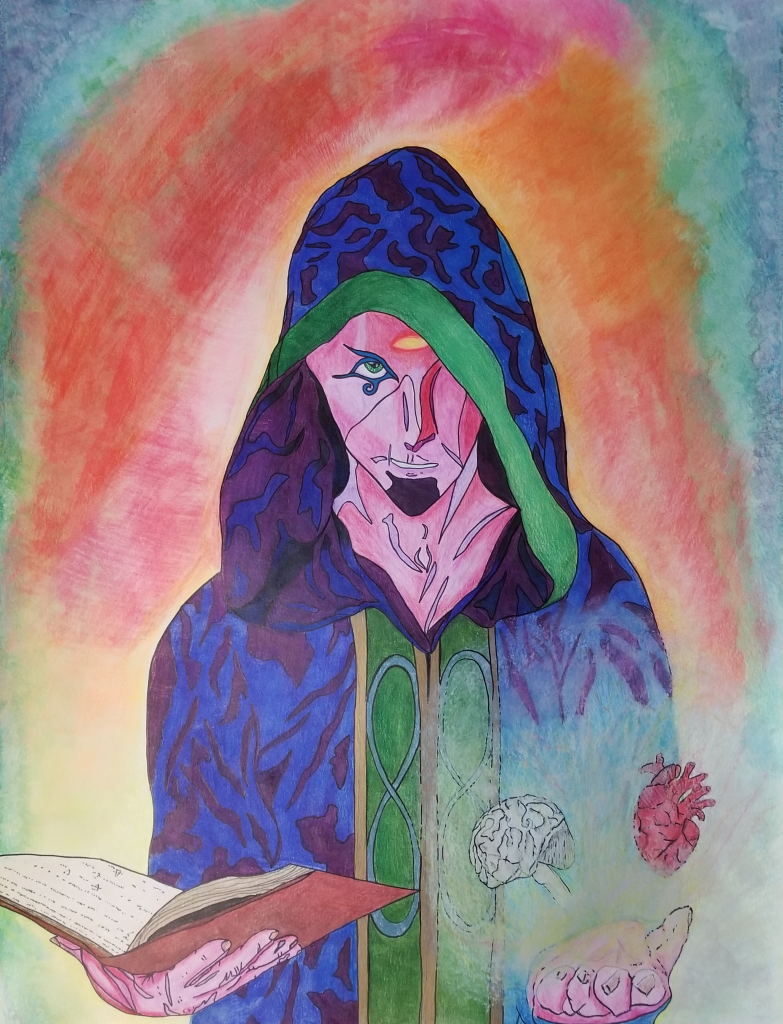
    (image: The Fool from the upcoming Tarot of Perception)

    The Fool is the beginning, but not the beginning most people are comfortable with. This is not where you have a plan, a safety net, and a clear understanding of what happens next. This is the beginning that shows up when you do not feel ready, when you do not have enough information, and when logic has already done everything it can do and is now just pacing back and forth trying to keep you from making a decision. The Fool is that moment where something inside you says it is time to move, and your mind immediately starts listing every possible reason why that would be a terrible idea. That tension, that push and pull between knowing and hesitation, is where The Fool lives.

    People love to misunderstand this card because it makes them uncomfortable. It is easy to look at The Fool and reduce it to recklessness. To assume it represents someone who does not think things through or who is blindly stepping into danger without awareness. That is not what is happening here. The Fool sees the cliff. The Fool understands the risk. The Fool knows there is no guarantee that things will work out cleanly or easily. The difference is that The Fool moves anyway, not because there is no risk, but because staying still has a cost that is often much higher than we are willing to admit.

    We are taught from a very early age to avoid that kind of movement. We are taught to plan, to prepare, to justify every decision in a way that makes sense to other people. We are rewarded for being predictable, for being responsible, for making choices that can be explained in neat, logical terms. Risk is something that is tolerated only when it comes with a clear and measurable outcome, which completely defeats the point of risk in the first place. The Fool does not operate inside that system. The Fool does not wait for permission, does not pause for validation, and does not need a detailed explanation before taking the first step. The Fool moves because something deeper than logic has already decided that movement is necessary.

    That is why this archetype feels so disruptive. It does not allow you to hide behind overthinking or delay disguised as preparation. It cuts through all of that and leaves you with a very simple and very confronting question… Are you going to move or are you going to stay where you are, pretending that staying is the same thing as being safe. A lot of us sit with that question longer than we realize, circling the same decision over and over again, convincing ourselves we need more time, more clarity… more certainty. Sometimes that is true, but often it is fear, and not even loud, obvious fear, but quiet, reasonable fear that wears the guise of responsibility and practicality.

    The Fool does not argue with that fear. It does not try to eliminate it or pretend it is not there. It acknowledges it and moves anyway, which is where trust comes into the conversation in a way that is very different from how people usually think about it. Trust here is not about believing everything will work out perfectly. It is not about ignoring the possibility of failure or convincing yourself that nothing can go wrong. It is about understanding that things might not go the way you expect and deciding that the experience of moving forward is still worth it. Trust is knowing the risk and accepting it, not pretending it does not exist.

    The Fool is not just a concept sitting in a deck of cards. It shows up in very specific, very personal ways. It shows up in the job you know you have outgrown but have not left because it is stable. It shows up in the relationship that functions on the surface but feels like you are slowly disappearing inside it. It shows up in the creative ideas you keep putting off because you are waiting for the moment when you feel completely ready, which is a moment that does not actually arrive. It shows up anywhere in your life where you are standing still, not because you do not know what to do, but because doing it would change things in ways you cannot fully control.

    The Fool does not allow you to pretend you do not know. It has a way of surfacing that quiet awareness that something needs to shift, even if you are not ready to deal with it yet. You can ignore it for a while, distract yourself, rationalize your way around it, but it does not go away. It lingers, it repeats, it shows up in different forms until eventually you have to either listen to it or make a conscious decision not to. That is an important distinction, because staying where you are is still a choice. It is just a choice that often comes with its own consequences, ones that tend to show up later in the form of regret, frustration, or a sense that you have been holding yourself back.

    In the structure of the Major Arcana, The Fool is numbered zero, which is significant in a way that is easy to overlook. Zero is not empty, it is potential. It is the space before something takes shape. The moment before a decision becomes action. The pause before movement. It contains everything that could happen without committing to any one outcome. This is where The Fool exists, in the open, undefined space where possibility is at its highest and certainty is at its lowest. It is not a comfortable place to be, but it is where every meaningful beginning happens.

    The Fool is not something you experience once and move past. It is not just the start of the journey, it is a state you return to again and again. Every time you step into something new. Every time you outgrow a version of yourself. Every time life shifts in a way you did not plan for…you are back at zero. You are back in that space where you do not have all the answers and cannot rely on the structures that used to feel stable. The Fool is not a single moment, it is a recurring invitation to engage with life in a way that requires openness, adaptability, and a willingness to move without guarantees.

    Every card that follows in the Major Arcana still carries a piece of The Fool within it. The Magician builds, but only because The Fool was willing to begin. The High Priestess trusts intuition, but only because The Fool stepped into the unknown. The Hermit seeks solitude, but only because The Fool was willing to leave what was familiar. Over and over again, the journey asks you to return to that same place of uncertainty and choose movement anyway. There is no point where you become so experienced or so certain that you no longer need The Fool. If anything, the deeper you go, the more important it becomes.

    The question is not whether The Fool is present, but where. It is in the decisions you keep postponing. The ideas you keep revisiting. The parts of your life that feel like they are waiting for you to do something. It is in the moments where you feel that mix of excitement and resistance, where something feels right and terrifying at the same time. That combination is usually a good indicator that you are standing at an edge, whether you acknowledge it or not.

    The challenge is not to eliminate the fear or wait until it disappears. Recognize that it is part of the process and not a sign that you should stop. The Fool does not require you to feel confident or certain or fully prepared. It requires you to take a step, even a small one, in the direction that feels true. Even if you cannot explain it perfectly to yourself or anyone else. That step is what shifts you from thinking about change to actually engaging with it. Once you are in motion, things begin to unfold in ways that are impossible to predict from a place of stillness.

    This is also where people tend to overcomplicate things, because they assume The Fool is asking for something dramatic and life-altering in a single moment. Sometimes it is, but often it is something much simpler and much harder at the same time. It is having a conversation you have been avoiding. It is starting something without announcing it or seeking approval. It is admitting that what you thought you wanted is not actually what you want anymore. It is choosing to move in a way that is aligned with who you are becoming, even if that creates discomfort in the short term.

    The Fool is not about chaos for the sake of chaos. It is about alignment and movement. It is about recognizing when your life has become too small for you and doing something about it before that smallness becomes permanent. It is about trusting that you can navigate what comes next, even if you do not have a clear picture of it yet. That trust is not based on guarantees, it is based on your ability to respond, to adapt, and to learn as you go.

    Modern culture does not make this easy. It encourages hesitation, overanalysis, and the illusion that everything can be controlled if you just plan well enough. The Fool disrupts that illusion by reminding you that life does not operate on a fixed script. Things change, opportunities appear and disappear. Sometimes the most important moments do not look important until you are already in them. Waiting for perfect conditions often means missing the moment entirely. The Fool has no interest in waiting for a version of life that never actually arrives.

    The Fool is an invitation. Not a demand, not an obligation, but an invitation to step into something new without needing to know exactly what it will become. It asks you to trust your own experience enough to take a step forward, even when it feels uncertain. It asks you to engage with your life as it is unfolding, rather than trying to control it into something predictable. It asks you to begin, not because you have everything figured out, but because beginning is how you figure things out.

    It is worth asking yourself where this energy is already present in your life. Where are you standing still because movement feels risky? Where are you waiting for clarity that is not going to arrive until you take action? Where are you holding yourself back because you think you need to be more prepared than you actually do?

    The Fool does not wait for perfect conditions. The Fool does not ask for permission. The Fool does not promise that everything will work out neatly. The Fool offers something much more valuable, the chance to move, to begin, to engage with your life in a way that is active rather than reactive. This is the starting point. This is zero. This is the edge. Taking the step or not is entirely up to you.

    No comments on 0 – The Fool
  • I’m Tired of These Mf’ing Snakes on this Mf’ing Day:

    March 17, 2026
    Community, Festivals/Events

    I Don’t Care What Your Sister’s Friend’s Husband’s Boss’s High School Teacher Said Online… St. Patrick Didn’t Destroy the Druids.

    (everything stated in this blog is based upon my own research, personal practice, and opinion)

    Every year, somewhere between the first shamrock cookie and the third pint dyed an alarming shade of green, the same “historical” claim starts circulating online. Someone posts a meme confidently announcing that St. Patrick destroyed the Druids and wiped out paganism in Ireland. The tone usually suggests the poster has uncovered a dark historical truth that has been suppressed by textbooks, churches, historians, archaeologists, and presumably… Big Shamrock.

    St. Patrick didn’t just convert Ireland, we are told. He eradicated Druidism. He burned sacred groves. He crushed the pagan priesthood. Basically showing up in the fifth century like, “Nice religion you have here. Be a shame if someone converted the entire island.”  It’s a compelling story. It’s dramatic. It has a villain and a victim. It has just enough historical flavor to feel plausible. Unfortunately for the meme economy, it is almost entirely unsupported by the evidence.

    The real story of how Christianity spread in Ireland is slower, more complicated, and honestly much more interesting than the legend. Once you look at the sources historians actually use, the idea that St. Patrick single-handedly destroyed the Druids starts to look more like a very enthusiastic game of telephone played across fifteen centuries.

    Historians love primary sources. If you can have from the past speaking in their own words, that is pure gold. In St. Patrick’s case, we are lucky. Two texts survive that scholars widely agree were written by St. Patrick himself: the Confessio and the Letter to Coroticus. These documents are short, but they are extraordinarily important because they give us Patrick’s own account of his mission (Bieler, The Patrician Texts in the Book of Armagh, 1979).

    The Confessio reads less like a triumphal declaration and more like a personal reflection. St. Patrick talks about his life, his faith, and the struggles he faced while preaching Christianity in Ireland. He describes baptizing converts, establishing Christian communities, and dealing with critics who questioned his authority. What he does not do is brag about annihilating a pagan priesthood. He does not mention destroying Druids. He does not describe religious warfare. He does not portray himself as the conqueror of Ireland’s ancient religion. Instead, the tone is that of a missionary trying to persuade people and build communities. He repeatedly frames his work as evangelism, not conquest. If he had personally wiped out an entire religious class, you would expect at least a humble brag somewhere in the text. Something like, “Also, by the grace of God, I defeated the Druids in spectacular fashion.” …that moment never arrives.

    The famous confrontations between Patrick and the Druids come from texts written long after he died. In the seventh century, a cleric named Muirchú wrote a biography of St. Patrick called Vita Sancti Patricii. This work includes dramatic episodes where St. Patrick performs miracles and defeats pagan priests in spiritual contests. It’s entertaining stuff. Patrick calls down divine power. Druids attempt magical counterattacks. Pagan kings witness the spectacle and convert. If you squint a little, it feels like a medieval crossover episode between theology and fantasy literature. Historians treat these accounts carefully because they were written roughly two hundred years after St. Patrick’s lifetime. They belong to a genre known as hagiography, which is pretty much the medieval equivalent of a superhero biography.

    Saints in hagiographies routinely defeat demons, raise the dead, and perform miracles that leave their opponents spiritually flattened. These texts were meant to inspire devotion and demonstrate the power of Christianity, not to provide historical reporting. Thomas Charles-Edwards, one of the leading historians of early medieval Ireland, notes that these later biographies reflect the concerns of the seventh century more than the realities of the fifth (Early Christian Ireland, Cambridge University Press, 2000). In other words, by the time the dramatic St. Patrick vs Druids stories appear, we are already deep in the territory of legend.

    If you ever need proof that Patrick’s story accumulated legend over time, the snake miracle is a good place to start. According to tradition, Patrick drove all the snakes out of Ireland. That sounds impressive. Hell, it also sounds like something that might make you a permanent national celebrity. There is just one problem… Ireland never had snakes. After the last Ice Age, the island became separated from mainland Europe before reptiles like snakes could recolonize the land. Geological and zoological evidence confirms that snakes have never been native to Ireland (National Geographic, “Why Ireland Has No Snakes,” 2014). This makes it obvious that the famous miracle cannot be literal. Later writers often suggested the snakes were symbolic representations of paganism or Druids. Maybe they were. Maybe the story evolved that way later. Either way, it is clearly a symbolic legend rather than a historical event. The snake story is memorable, but it is not history.

    Another detail that gets lost in the myth is that St. Patrick was not the first Christian missionary in Ireland. We know this thanks to a line written by the fifth-century chronicler Prosper of Aquitaine. In his chronicle, Prosper notes that in 431 CE Pope Celestine sent a bishop named Palladius to Ireland “to the Irish believing in Christ” (Chronicon, entry for 431). That phrase is important because it means that there were already Christians in Ireland before St. Patrick’s mission began. Christianity had likely spread through trade, travel, and cultural connections with Roman Britain. St. Patrick arrived as part of an ongoing movement rather than as the lone figure bringing Christianity to a completely pagan island. This undermines the idea of a sudden religious revolution. Christianity was already taking root in Irish communities before St. Patrick began his work.

    One of the most consistent conclusions among historians is that Ireland’s conversion to Christianity was gradual. Archaeological evidence shows Christian symbols appearing alongside older religious practices for generations. Written sources suggest that pagan traditions continued to exist long after St. Patrick’s lifetime. Thomas Charles-Edwards describes the transition as a slow cultural shift rather than a violent rupture (Early Christian Ireland, 2000). Religious systems do not typically disappear overnight; they evolve as societies change. As political alliances shift, and cultural practices adapt. Ireland followed that pattern. Instead of a sudden collapse of Druidism, the evidence suggests a gradual transformation of religious life.

    The idea that St. Patrick destroyed the Druids also runs into another problem. Druids continue appearing in Irish texts after St. Patrick’s time. Early medieval literature still references Druids as learned figures, advisors, and ritual specialists. Their social role slowly declined, but it did not vanish overnight (Kelly, A Guide to Early Irish Law, 1988). That slow decline makes sense when you remember that Druids were not simply priests. They were scholars, judges, teachers, poets, and keepers of legal tradition. They held positions within the intellectual and cultural elite of Celtic society. When Christianity spread through Ireland, those social roles did not evaporate. Many of them were absorbed into the new Christian scholarly culture.

    Early Irish monasteries became major centers of learning. Monks studied theology, law, poetry, and history. They preserved manuscripts and maintained intellectual traditions. James MacKillop notes that the continuity between pre-Christian learning and early Christian scholarship in Ireland is striking (The Oxford Dictionary of Celtic Mythology, Oxford University Press, 1998). It is entirely plausible that members of the learned class who once served as Druids transitioned into Christian education and monastic life. History has plenty of examples where religious specialists adapt to new belief systems rather than disappearing entirely. Cultural knowledge rarely vanishes overnight. It tends to migrate.

    Many of the most important Irish mythological texts survive today because Christian monks wrote them down. Stories from the Ulster Cycle, the Mythological Cycle, and other bodies of Irish legend appear in medieval manuscripts produced in monastic scriptoria. These texts often preserve pre-Christian traditions, even when the scribes occasionally add Christian commentary. Without those monks copying and preserving oral traditions, much of Ireland’s mythological heritage might have disappeared. The religion sometimes accused of erasing pagan culture also ended up preserving large portions of it. History loves irony.

    Despite all of this evidence, the idea that St. Patrick destroyed the Druids keeps resurfacing online. Part of the reason is that dramatic narratives travel well. A heroic saint overthrowing an ancient religion makes for a memorable story. A slow, complicated cultural transformation involving politics, economics, and social change does not make for a viral meme.

    Modern ideological debates also play a role. Different groups sometimes reshape historical narratives to support contemporary identities. Some Christian traditions historically emphasized St. Patrick’s triumph over paganism. Some modern pagan communities emphasize the destruction of ancient traditions. Both perspectives simplify what was actually a long and complex process. Then there is the internet itself… which tends to reward confident claims far more than careful nuance. Unfortunately history rarely survives that process intact.

    Once you set the legends aside, the historical St. Patrick becomes a far more interesting figure. He was a Briton who had been captured and enslaved in Ireland as a teenager. After escaping, he eventually returned as a missionary, motivated by a sense of religious calling. He travelled widely across Ireland preaching Christianity, baptizing converts, and building communities. His efforts contributed to the spread of Christianity across the island, but they were part of a much larger historical transformation that unfolded over generations. St. Patrick was influential, but he was not a one-man religious bulldozer.

    The claim that St. Patrick destroyed the Druids or eradicated paganism in Ireland doesn’t hold up historically. There is no evidence in St. Patrick’s own writings that he did anything of the sort. The dramatic confrontations between Patrick and pagan priests appear in texts written centuries later. Archaeology and literature show that pagan traditions continued alongside Christianity for generations. Ireland’s conversion was gradual, complex, and shaped by cultural adaptation rather than sudden annihilation. Which may not be quite as exciting as the myth, but it has one major advantage.

    It actually happened.

    Sources

    Bieler, Ludwig. The Patrician Texts in the Book of Armagh. Dublin Institute for Advanced Studies, 1979.

    Charles-Edwards, T. M. Early Christian Ireland. Cambridge University Press, 2000.

    Kelly, Fergus. A Guide to Early Irish Law. Dublin Institute for Advanced Studies, 1988.

    MacKillop, James. The Oxford Dictionary of Celtic Mythology. Oxford University Press, 1998.

    Prosper of Aquitaine. Chronicon, entry for 431 CE.

    National Geographic. “Why Ireland Has No Snakes.” 2014.

    2 comments on I’m Tired of These Mf’ing Snakes on this Mf’ing Day:
  • The Embodied Occultist:

    March 11, 2026
    Basics, Ceremonial, Chaos, Dreams/Oracle/Divination, Glamour, Planetary, Rituals, Tarot, Uncategorized

    Your Flesh Suit Isn’t a Magical Afterthought

    You are not a disembodied orb of light whispering incantations through a human meat puppet. You are a whole-ass living being. If you’re treating your body like an inconvenient vessel for your “higher self,” congratulations…you’re doing it wrong. We’re not here to transcend the flesh; we’re here to ensoulit. You can chant until your throat gives out and visualize until your third eye aches… if you’re ignoring your body, your magick is going to short-circuit.

    Your body is your first altar. Your body is the compass. The sensor. The conductor. If you think you’re going to ascend to some glittery plane of astral mastery without knowing how to sit still and breathe deeply in your own skin, you are sorely mistaken and possibly possessed by Pinterest.

    Magick isn’t just a mental game or a spiritual vibe. Magick is a full-spectrum engagement, and the body is your launchpad. Power has to move through something, and that something is your bones/breath/blood. Ignore that, and you’re basically trying to run high voltage through a wire that isn’t connected to anything.

    When you cultivate embodiment, your perception sharpens. Your energetic accuracy improves. You stop confusing emotional static with divine revelation. You feel where the current is, where it isn’t, and when it shifts. You know when to act, when to wait, and when to get out of your own way.

    Your nervous system is not separate from your energetic system. It’s the physical infrastructure through which you process everything. Spirit contact? Triggers the vagus nerve. Trance? Altered brainwaves. Ecstasy? Floods of neurochemicals. Burnout? That’s your nervous system screaming in twelve languages. You can’t run high-voltage rituals through a frazzled, dysregulated body and expect clean results. You’ll blow a fuse, or worse, mistake adrenal chaos for spiritual activation.

    Learn to down-regulate. Learn to up-regulate. Learn what safety feels like in your own body so you can push your edges without shattering. Breathwork. Touch. Movement. Sleep. Nutrition. These things are not mundane distractions from the Work. They are a fundamental foundation of the Work. The more your nervous system is regulated, the more spirit can move through you without frying your circuits.

    Pain, Pleasure, and the Ritual of Sensation

    Your body speaks in sensation. Pain and pleasure aren’t distractions; they’re information and power sources. You can use them to anchor spells, catalyze transformation, or access trance states faster than any chant ever will. Pleasure opens gates. Pain sharpens focus. Hunger intensifies clarity. Stillness deepens access. Movement unleashes flow. You don’t need to turn your ritual into a burlesque show or a Spartan bootcamp. You do need to acknowledge that your body’s sensations are part of the sacred current.

    What happens when you bring your full sensual awareness to a working? What happens when you move like the spell instead of just speaking it? What would it mean to feel your power rather than think it? Embodied ritual hits harder. Period.

    The Body, a Divination Instrument

    Your intuition isn’t floating somewhere above your head in a mystical cloud. It lives in your fascia. Your gut. Your skin. Your spine. Your shoulders. Your breath. The body knows things. It tenses, relaxes, opens, shuts down, tingles, clenches, shivers, and burns. These aren’t random reactions, they’re messages. When you train yourself to notice and interpret them, your body becomes one of the most accurate and honest divination tools you’ll ever use.

    There are a lot of ways to practice divination that bring your body directly into the process. Take pendulum work, for example. The pendulum is not some mystical floating oracle. It is responding to the tiny micro-movements in your arm and hand. Your nervous system is basically acting like a yes or no compass before your conscious mind even catches up.

    Another approach is paying attention to body-scan responses during a reading. Ask a question and notice what happens internally. Does your chest open up? Does your stomach tighten? Do your shoulders subtly drop? Those reactions often show you what your mind has not sorted out yet.

    Be aware of your breath, posture, and muscle tension while you work. If something in a reading is off, the body usually signals it immediately. Breath gets shallow. Your jaw tightens. Your back stiffens. When something rings true, the body tends to soften. It is like getting real time feedback that does not bother with polite explanations.

    Then there is trance journeying, where the entire soma becomes the map. Instead of interpreting symbols on a table, you follow sensation, movement, and internal imagery as the pathway itself. Tools are helpful, but they are not the source of intuition. Decks and dice can guide the process, but the real instrument has been sitting in your chair the whole time. Your body already knows the answers. The real challenge is being willing to listen to it.

    Trance Without Dissociation

    Dissociation can be a survival mechanism, and it can look a lot like trance from the outside. it’s not sustainable, and it’s not where the deep power lives. True trance is an embodied altered state; you go deep without losing the anchor of your body.

    Trance works best when you bring your body with you instead of trying to ditch it like a coat at the door. One of the easiest ways in is through movement. Dance a little. Breathe with intention. Let rhythm carry you. Your body already knows how to slip into altered states if you give it something steady to follow. Your senses help too. Sight, sound, touch, smell, taste. They are not distractions, they are doorways. Let them pull you deeper instead of treating them like something you have to shut off.

    While you are moving through the inner landscape, keep a thread of awareness in your body. Notice your limbs. Notice your breathing. Feel the space around you. You are traveling, sure, but you are still home base for the whole experience. When it is time to come back, come back properly. Have a way to ground yourself again. Breathe. Stretch. Touch something solid. Drink some water. Do not just snap out of trance and wander through the rest of your day like a spirit drunk raccoon.

    A good trance state does not rip you out of your body. It anchors you through it. The goal is not floating away into the cosmos. The goal is rooting down and letting the body become the gateway.

    Reclaim the Body from Shame and Disconnection

    A lot of us are walking around carrying trauma, shame, and a lifetime of cultural programming that tells us our bodies are problems to fix instead of power to work with. We get trained early to tune out. Shrink ourselves. Clean ourselves up. Disconnect. We learn to push through pain, side-eye pleasure, and treat being in our bodies like it’s optional.

    Bringing your body back into your magical practice starts pretty simply. It means making peace with your shape, your scars, your needs, and the weird rhythms your body runs on. It means letting yourself actually feel things, even when it’s messy and inconvenient. It means moving, dancing, using your voice, and touching the world around you so you remember you’re alive inside your own skin. It means refusing to buy into that toxic strain of spirituality that says you’re more “evolved” the farther you float away from your body. Dissociation isn’t enlightenment… it’s just leaving the room.

    Embodiment is an act of resistance. It’s reclamation. It’s standing here and saying, yeah… I belong here. In this body. On this earth. In this ritual. Right now. Your body is not a liability. It is your sacred instrument. It holds your power. Your wisdom. Your connection to the earth, the stars, and everything in between. The deeper you live in it, the more magick you can hold. Find your center, and cast from within.

    No comments on The Embodied Occultist:
  • Mercury in the Microwave:

    March 4, 2026
    Basics, Community, Planetary

    Don’t fear the teacher…

    (everything stated in this blog is based upon my own research, personal practice, and opinion)

    Every few months, the same warning starts circulating through occult circles, astrology pages, and group chats. Mercury is about to go retrograde. Cue the collective groan.

    Mercury Retrograde gets blamed for everything from lost emails to broken printers to that text you definitely should not have sent your ex at 1:14 AM. It shows up like a cosmic gremlin. Someone immediately blames their crashing laptop. Someone else starts side eyeing their travel plans. A friend sends a message saying “Don’t sign anything for the next three weeks.” Meanwhile half the internet is preparing for technological doom like the planet Mercury personally logs into our devices and starts deleting things out of spite. The reputation Mercury Retrograde has picked up over the years is impressive, if not a little unfair.

    In reality, Mercury Retrograde isn’t some cosmic disaster waiting to happen. It’s not the universe punishing you for forgetting to ground your energy or skipping your morning meditation. It’s simply part of the natural rhythm of the sky. More importantly, it’s a rhythm that shows up often enough that we should probably stop treating it like an emergency.

    Mercury goes retrograde about four times every year. Each retrograde lasts around three weeks. This means that over the course of a year we spend roughly two full months under Mercury Retrograde influence. Two months. That’s not some rare celestial glitch, it’s a recurring season in the cosmic calendar. If something shows up four times a year like clockwork, the sensible response is not fear. The sensible response is learning how it works.

    First, the astronomy… Despite how the name sounds, Mercury is not literally reversing its direction in space. Planets don’t suddenly decide to throw their orbit into reverse like someone missed their exit on the cosmic freeway. What we’re seeing is an illusion created by perspective. Mercury orbits the Sun much faster than Earth does. When Mercury swings around the Sun and passes us in its orbit, there’s a period where, from our vantage point on Earth, the planet appears to slow down, stop, and move backward through the sky.

    It’s similar to driving on the highway when a faster car passes you. For a moment it can look like the other car is drifting backward relative to your position, even though it’s actually moving forward faster than you are. That’s retrograde motion. Ancient sky watchers noticed this strange dance thousands of years ago. They tracked it carefully and saw that it happened regularly. Astrologers eventually began associating those retrograde periods with certain patterns here on Earth, particularly in the areas of life ruled by Mercury. And… well, Mercury rules quite a lot.

    Communication, language, information, travel, trade, writing, thinking, and the general exchange of ideas all fall under Mercury’s domain. He’s the messenger, the translator, the negotiator, and occasionally the trickster. He moves between worlds, carrying information back and forth. If there’s a system that moves messages, thoughts, or data from one place to another, Mercury probably has his fingerprints on it. Which explains why people notice when things get a little… tangled during retrograde periods. Emails get misunderstood. Travel plans shift. Someone rereads a contract and suddenly realizes there’s a detail nobody noticed the first time. Conversations that seemed finished come back around for another round. The important distinction is that Mercury Retrograde doesn’t usually create problems; It reveals them.

    Think of it like editing a piece of writing. When you’re drafting something, you’re focused on forward motion. The goal is to get the words down and keep moving. When you go back to edit, suddenly you notice all the little issues that slipped past you earlier. The awkward sentence. The unclear thought. The detail you forgot to include. Retrograde is the editing phase of the cosmic cycle.

    Mercury’s normal forward motion pushes communication outward. Ideas move quickly. Plans develop. Messages fly back and forth. During retrograde, that momentum slows and turns inward. Instead of rushing ahead, the system loops back over what already happened. This is why so many retrograde experiences involve revisiting something from the past. Old conversations resurface. Old problems ask for attention again. Old ideas that never quite got finished start knocking on the door of your mind.

    Sometimes even old relationships make surprise appearances. The stereotype about exes showing up during Mercury Retrograde exists for a reason. When the energy of communication loops backward, unfinished conversations tend to follow the same path. Occasionally that’s meaningful. Occasionally it’s just awkward. Either way, it usually tells you something about the story that wasn’t fully resolved.

    Rather than seeing Mercury Retrograde as a time to panic, mindful practitioners treat it as a time to pause. Instead of trying to push new things forward at full speed, retrograde periods should be used for reflection, review, and recalibration. In other words, the things most of us claim we never have time to do. It’s a great time to revisit old magical journals and notice patterns in your practice. A spell you tried months ago might suddenly make more sense now that you’ve gained more experience. A concept you skimmed past in a book might reveal new layers when you read it again.

    Research tends to go well during retrograde periods too. Digging deeper into systems you’re already studying can produce surprising insights. Mercury doesn’t just govern communication between people. It also rules the voice inside your own head. The thoughts you repeat to yourself. The narratives you build about your life. The assumptions you carry about the world around you.

    Retrograde periods have a funny way of bringing those internal conversations into focus. You might notice a pattern in your thinking that you’ve been ignoring. You might realize that a belief you’ve carried for years doesn’t actually make sense anymore. You might catch yourself telling the same story about your past and suddenly realize it’s due for a rewrite. That kind of awareness is powerful.

    Awareness is the first step to transformation. You can’t change a pattern you refuse to see. Retrogrades make those patterns harder to ignore. That doesn’t mean everything runs perfectly smoothly during these periods. Technology does glitch sometimes. Messages do get mixed up. Travel hiccups happen. These moments are usually manageable if you approach them with a little patience and a sense of humor.

    The practical side of navigating Mercury Retrograde is surprisingly simple. Slow down. Read important things carefully. Double check details. Back up your files. Give yourself a little extra time when you’re traveling or dealing with logistics. Most of the so called Mercury Retrograde disasters happen when people rush through communication without paying attention. The retrograde doesn’t cause the mistake; it just exposes it.

    It’s cosmic quality control. Four times a year the universe taps the brakes and says, “Hold on a minute. Before we keep going, let’s make sure everything is actually working the way you think it is.” That pause might feel inconvenient, especially in a world that constantly pushes us to move faster and faster. But… those pauses are often where the most useful insights appear.

    When Mercury finally stations direct again, things tend to move forward with greater clarity. The edits have been made. The misunderstandings have been sorted out. The loose threads have been addressed. Now the message can travel cleanly again. Seen through this perspective, Mercury Retrograde isn’t something to dread. It’s something to appreciate.

    Four times a year we’re given a natural checkpoint in the flow of communication and thought. Four times a year we get a reminder to slow down, rethink what we’ve been doing, and make sure the story we’re telling actually reflects the truth. That’s not bad luck; that’s maintenance.

    The next time someone groans that Mercury Retrograde is coming and prepares for technological doom, you can smile a little. Not because chaos is guaranteed. Because the universe just scheduled another editing session. If you’re paying attention, those edits can make the next chapter of your life a lot clearer.

    No comments on Mercury in the Microwave:
  • Post-Ecstatic Integration:

    February 26, 2026
    Basics, Ceremonial, Chaos, Dreams/Oracle/Divination, Glamour, Planetary, Rituals

    The Ritual Isn’t Over Just Because the Candle Burned Out

    (everything stated in this blog is based upon my own research, personal practice, and opinion)

    The ritual doesn’t end when the candle burns down and the last note of your playlist fades into awkward silence. Don’t just pack up the altar, wash the wine glass, and go back to scrolling. While this version of practice might be entertaining; It is not transformational. That candle was not decoration. That chant was not aesthetic ambiance. That trance state you dropped into was not a fluke. You opened something. You shifted something. You disrupted the still pond of your life and sent ripples moving outward. The altar may be dark now, but the current you stirred up is still traveling. Ritual is not the event… it is the ignition. The second a working ends, integration begins. Integration is the part that decides whether your magick roots itself into your bones or evaporates like a dream forgotten by breakfast. If you want a sustainable practice, this is where you put your focus. Not just on raising energy, but on becoming the kind of person who can live what they invoked.

    Let’s start with mechanics, because this is not just poetry and incense smoke. During a powerful ritual, whether it is ecstatic dance, invocatory spellwork, shadow excavation, ancestral communion, or your own particular brand of divine dismantling, your nervous system enters an altered state. Your brain chemistry shifts. You are bathing in dopamine, endorphins, adrenaline, oxytocin. If you cracked open old trauma or grief, you probably got a sharp spike of stress hormones too. It is intense, embodied, and real. In that peak state, transformation feels easy. Insight flows like you tapped into a cosmic WiFi signal. You see clearly, and feel powerful. You might feel held, supported, flooded with meaning. Some people feel euphoric. Some feel raw and stripped down. Either way, you are not in your baseline state.

    Then you come back to regular life. Laundry. Bills. That person who knows exactly how to poke your oldest wound. The world did not pause because you had a breakthrough. This is the integration gap. The space between the truth you touched in ritual and the life you actually live. The stretch between high voltage clarity and habitual behavior. Between the vow you made in candlelight and the reflex you fall into on a random Tuesday. Integration is where you take the truth you touched and ask, “How do I actually live this?”

    This is where too many practitioners quietly lose the thread. It is far more exciting to plan the next working than to change your daily habits. It is easier to light another candle than to set a boundary. It is more dramatic to chase the next ecstatic high than to rebuild your coping mechanisms from the ground up.

    Transformation is not proven in the ritual; it is proven in the rebuild. (read that again)

    Transformation is proven in what you do when the music stops and nobody is watching. There is a distraction trap that shows up here, and it is super shiny. It is very easy to confuse the feeling of power with actual change. In the ritual you are charged. You are the conduit, and you feel plugged directly into something vast and electric. You might be crying into your own liberation, and it feels absolutely undeniable. Three days later you snap at someone, or you fall back into the same numbing habit. Maybe you spiral into the same existential fear you thought you burned away. Suddenly, you are questioning everything. Did it even work? Was I just hyped up? Did I imagine the whole thing?

    No…you did not imagine it.The initiation ended, now the integration begins. Big energy does not fix you. Big energy reveals you. The spell cracks the shell to expose what is underneath. What you do after determines whether you grow or whether you wander around dazed, wondering why the magic “left.” Ritual is the spark. Integration is the fire you tend in the quiet.

    The aftermath can feel weird enough that people assume something went wrong. Emotional whiplash is common. One minute you feel expansive and powerful, the next you are crying because your toast burned or someone looked at you funny. That is not a cosmic punishment. That is your nervous system recalibrating after intense energy movement. You stirred things up… of course they are moving.

    Sometimes the opposite happens. You expected fireworks. Instead you feel flat, numb, and/or like maybe you dreamed the whole thing. Your mind cannot immediately process the magnitude of what your body and psyche just did, so it dampens the signal. That buffering does not mean nothing happened. It means your system is integrating at its own pace.

    This next one can be brutal. The healing you asked for arrives wearing the face of your oldest habit. The boundary you invoked is immediately challenged. The clarity you sought shines a spotlight on exactly where you have been avoiding responsibility. This is pattern blowback. You are being given an opportunity to respond differently. Integration is not a pass or fail exam. It is an application process. You activated something. Now life says, “All right. Show me.”

    You may also notice synchronicities ramping up. Dreams intensify. Conversations echo the language of your spell. People reflect back the themes you were working with. Maybe animals behave strangely, random books fall open to eerily relevant pages, and your reality feels slightly rearranged. Notice it. Stay grounded. You do not need to inflate it into a grand narrative. Just keep the thread.

    Sometimes, after a massive energetic push, there is the great flatline. Silence. Dullness. Feeling as if someone turned down the volume on your whole spiritual life. You have not lost your magick. You expended it. Your system needs rest. You do not sprint a marathon and then complain that you are tired. You refuel. This is where integration becomes practical.

    Give the ritual a voice. Within a day or two, sit down and ask yourself what it was really about. Not the surface level intention, the deeper current. What did you actually move? What truth did you brush against? What is asking to be different now? Write it out. Speak it aloud. Record yourself rambling if that is your style. Get it out of the abstract and into form. Naming anchors experience.

    Track the fallout. Not obsessively, or like you are hunting for proof. Attentively. Notice dreams. Notice emotional surges. Notice how you react differently, or where you feel resistance. Notice how other people respond to you. You are collecting evidence of change before your logical mind tries to gaslight you back into your old identity.

    Most importantly, make one tangible shift. Not a full life overhaul. Not a dramatic reinvention. One concrete action that embodies the spell. If you invoked courage, do the slightly uncomfortable thing. If you cut cords, behave like they are cut. If you called in clarity, create space to listen instead of drowning yourself in noise. Action seals energy. It tells your psyche this was not just a mood. It was a decision.

    Please, for the love of all things, take care of your nervous system. Eat real food. Protein, carbs… something that reminds your body it is safe and here. Take a shower or bath. Water is excellent at helping your system settle. Move your body gently. Walk, stretch, and shake out excess tension. If you feel fried, cancel what you can. Integration is labor. Treat it like recovery instead of pretending you are above biology.

    Dismantle the myth that every effective ritual must be intense. Some of the strongest magick is subtle. Uneventful. Quiet as moss growing on stone. You may feel nothing dramatic at all, and a week later you realize you held a boundary that used to collapse. A fear that once gripped you now barely whispers. A creative impulse returns after months of silence. This is mature magick that builds new realities instead of just collecting peak experiences.

    Magick does not end. Magick unfolds. Ritual is not a performance you finish and critique. Ritual is a doorway you walk through. The energy you raised continues to move. It touches relationships. It rearranges priorities. It exposes cracks in structures you thought were solid.

    Post ecstatic integration is where you step into the self you summoned. Where you hold the line when old habits beg you to fold. Where you choose to act like the spell already worked, even before the evidence is obvious. This is the long haul work. The grounded, no glam, sustainable path. Not chasing sensation, not stacking rituals like trophies, but building a life that can actually hold the power you call in.

    The candle burned out.

    Good…Now you get to become someone different because of it.

    No comments on Post-Ecstatic Integration:
  • Invoking Liber OZ:

    January 26, 2026
    Basics, Community

    Rights Are For All!

    CW – Image at bottom of article, depicting Lady Liberty, may be triggering to some individuals.

    (everything stated in this blog is based upon my own research, personal practice, and opinion)

    Liber OZ is one of those texts that looks tiny and harmless until you actually read it. Aleister Crowley wrote it as a declaration of human rights, but not the polite, committee-approved kind. This is not “we respectfully request better treatment.” It is “I have the right to breathe, move, speak, fuck, think, and live as I will, and anyone who says otherwise is trespassing on my soul.” It is one page of spiritual dynamite. Which makes it extremely relevant right now, when fascism is no longer whispering in the basement of history but clearing its throat on the national stage of the United States.

    Liber OZ declares the Rights of Man, and Crowley meant that in the broad human sense, not the bearded white landowner sense. The right to live by one’s own law. The right to think and speak freely. The right to love as one will. The right to work and play and rest as one will. The right to defend oneself. The right to kill those who would thwart these rights. (That last one makes people choke on their herbal tea, but we will come back to it.) The core idea is brutally simple. Your will is sacred. Not your whims. Not your consumer impulses. Your deep, actual Will, the axis of your being. Any system that tries to crush that is not just annoying or misguided… it is committing a spiritual crime.

    Look at the United States right now, not even a month into 2026, and tell me with a straight face that spiritual crimes are not being committed daily. Laws telling people what they can do with their bodies. Laws telling teachers what they can say. Laws telling parents which children count as real. Laws telling doctors when they are allowed to save lives. Laws telling books they are too dangerous to exist. This is not about “values.” This is about control. Fascism always dresses itself in the costume of morality. It says it is protecting children, tradition, God, or the nation. What it is actually protecting is hierarchy. Someone must be on top, someone must be beneath, and the state decides who goes where.

    Liber OZ spits in the face of that entire structure. It says no. You are not property of the state. You are not property of the church. You are not property of a political party, a corporation, or a mob of loud strangers with flags and microphones. You are a sovereign, autonomous being. That is not a metaphor; it is a magical fact. If you are an occultist and you do not believe that, then I have to ask what exactly you think magick is… Because if your will is not your own, then whose spell are you casting?

    Fascism is not just a political movement; it is a psychic parasite. It feeds on fear, resentment, and the desire to be told what to think to avoid the discomfort of uncertainty. It offers certainty in exchange for conscience. It offers belonging in exchange for agency. That is an enchantment, and not a good one. It is mass hypnosis with a badge and a budget, but Liber OZ is a counter-spell. It is a reminder that your will is not granted by the state. Your Will is not voted into existence. Your Will is not something you get if you behave nicely. Your Will is inherent. When a government starts telling you that certain people do not get rights, or that certain lives are expendable, or that obedience is more important than truth, your magical duty is not neutrality… your magical duty is resistance. Not just lighting candles and freezing jars, but refusing to internalize and propagate their lies.

    I’m angry, and I have a right to be. The United States likes to pretend it is the land of freedom while quietly turning freedom into a subscription service. You can have it if you fit the right demographic profile. You can keep it if you stay quiet. You can enjoy it as long as it does not inconvenience power. That is not freedom. That is a leash with a lot of slack. Liber OZ does not recognize that leash. It says you have the right to think as you will. That sounds boring until you remember how much effort is currently being spent to make people not think. To make them repeat slogans. To make them afraid of words. To make them distrust their neighbors. Thought is dangerous to fascism because it reveals contradiction. A thinking population notices that “small government” somehow needs to monitor bedrooms and classrooms. A thinking population notices that “protecting children” often means protecting institutions from accountability. A thinking population notices that the same people screaming about liberty are very interested in who you sleep with, what you read, and whether you can get healthcare.

    Liber OZ also says you have the right to speak as you will. This is where people get twitchy and start shouting about free speech absolutism. That is not what this is about. This is not about defending the right to harass or dehumanize. This is about refusing to let power dictate reality. Fascism depends on enforced narratives. It needs you to say that the sky is green if the leader says so. It needs you to accept that cruelty is kindness and that violence is order. Speech that challenges that is not just political. It is magical, and it disrupts the spell.

    Liber OZ says you have the right to love as you will. If you want a single sentence that terrifies authoritarians, that is it. Fascism needs rigid roles. It needs approved families, approved genders, and approved futures. Love that does not fit the script is a threat. Queer love. Interracial love. Childfree love. Poly love. Love that does not reproduce the system. Love that does not make new soldiers and obedient workers. When Liber OZ says you have the right to love as you will, it is not being poetic. It is declaring war on the factory of conformity.

    Magick is about alignment with will. Fascism is about erasing will. You cannot serve both. You cannot say you are walking your True Will while cheering for a system that tells millions of people they do not deserve autonomy.

    On to the line everyone gets nervous about… the right to kill those who would thwart these rights. Before anyone starts clutching pearls or calling the FBI, let’s be honest. Crowley wrote in a time when the world was already soaked in blood from states asserting their right to control bodies. This line is not a call to random violence. It is a recognition of a grim historical truth. Systems that deny basic human rights do not usually stop because you ask nicely. Self-defense is not just personal; it can be collective. If someone is trying to enslave you, and the only way to stop them is force, then the moral responsibility does not rest on the person resisting. It rests on the person who made violence necessary. The relevance today is not about physical killing. It is about killing lies, and apathy. Killing the idea that you have no power. Killing the spell of inevitability that says “this is just how things are now.” Fascism thrives on the belief that resistance is futile. Liber OZ is the document that says, no, actually, your will matters, and it matters even when it is inconvenient to power… especially when it is inconvenient to power.

    There is also something deeply American about this irony. The country was founded on a revolution against a distant authority that claimed divine right. Now we have politicians using God as a mascot while stripping rights with bureaucratic precision. The old tyrant wore a crown. The new one wears a suit and quotes scripture. Same impulse, but better branding. What drives me up the wall is watching spiritual people pretend this is not their problem. Acting as if politics is somehow outside the temple. Acting as if laws that decide who gets to live safely and who does not are not magical in effect. If your practice is about personal freedom, and you stay silent while that freedom is being narrowed for entire groups, then your altar is just decor. You are doing aesthetic mysticism, not liberation work.

    Liber OZ is short because it assumes you are brave enough to extrapolate. It does not give you policy. It gives you principle. The principle is that no authority has the right to override your essential nature. When the state decides that trans people should not exist in public. When the state decides that pregnant people should be forced into medical risk. When the state decides that history should be rewritten to be less uncomfortable. That is the state claiming authority over will, and that is exactly what Liber OZ says is illegitimate.

    Yes, I am angry. I’m angry because this country keeps acting shocked when authoritarianism shows up, as if it arrived by UFO instead of by ballot, budget, and silence. I am pissed off because the same people who scream about tyranny will happily cheer when it hurts the people they do not like. I am furious because we keep treating fascism like a difference of opinion instead of what it is, a disease that eats societies from the inside by convincing them cruelty is strength.

    Anger is not the enemy here. Apathy is. Anger is information. Anger says something is wrong. In magical terms, it is a current. The question is what you do with it. Liber OZ does not tell you to burn everything down. It tells you to live as a sovereign, autonomous being. That means voting. It means mutual aid. It means refusing to normalize dehumanization. It means protecting your community. It means not letting propaganda live rent-free in your head. It means saying no when no is dangerous. That is slow, stubborn, human magick.

    There is a reason fascism hates complexity. Real will is complex. It does not fit slogans. It does not fit “real Americans” or “traditional families” or “normal people.” True Will is messy. It includes disabled bodies, queer minds, immigrant dreams, and people who do not want the same future as their grandparents. A system built on sameness cannot tolerate that, so it tries to simplify humanity into categories it can control. Liber OZ is the opposite; It does not tell you what your will should be. It tells you that finding and living your Will is your right. That is terrifying to authoritarian systems because it means they do not get to decide what a good life looks like. They can threaten, but they cannot define you unless you let them.

    Your rituals, your sigils, your prayers, your meditations are not just about inner peace. They are about maintaining sovereignty, and autonomy in a culture that wants obedience. Every time you choose truth over comfort, you break the spell a little. Every time you defend someone else’s right to exist as themselves, you are practicing Liber OZ in action. Not as a dusty text, but as a living ethic.

    If you think fascism cannot happen here, you are not paying attention… it already is. There is no single switch… more like a dimmer. It starts with jokes, then laws, then silence, then fear. By the time people say “this feels like fascism,” it is usually already deep in the bones of the system. The time to invoke Liber OZ is not when the boots are already on your neck. It is when they are being laced up.

    What does this mean for occultists specifically? Your work is not neutral. If you work with gods of freedom and ignore prisons. If you work with spirits of justice and ignore courts stripping rights. If you work with ancestors who survived oppression and then shrug when it comes back with better PR. You are compartmentalizing your ethics. Magick does not care about your compartments. It flows through your whole life or it becomes theater.

    Liber OZ is not comfortable. It does not promise safety. It promises dignity. It does not say you will be liked. It says you will be free. Freedom is always risky, which is why authoritarians sell safety instead. Safety with conditions. Safety with paperwork. Safety that looks suspiciously like control.

    I love this country in the way you love a deeply flawed relative. Not with blind loyalty, but with furious hope that it can do better. The ideals were never perfect, but they pointed toward something like Liber OZ long before Crowley put it on paper. That belief is being tested; not by foreign enemies, but by domestic fear.

    If you are an occultist in the United States right now, Liber OZ is not just a text. It is a mirror. It asks you whether you actually believe in Will, or whether you just like the aesthetic of rebellion. It asks whether your practice is about liberation or just personal power. It asks whether you are willing to be uncomfortable for the sake of other people’s freedom.

    If you are tired, I get it. This is exhausting. Living under a system that keeps flirting with authoritarianism is like being stuck in a bad relationship with someone who keeps saying they have changed. Rage without rest burns you out. You do not have to be a hero. You do not have to fix the whole country. You do have to refuse to be spiritually anesthetized. You have to care enough to notice. You have to act where you can. You have to remember that will is not a solo project, it is relational. Your freedom is tied to other people’s freedom whether you like it or not. Until all of us are free, none of us are free.

    Liber OZ does not offer comfort. It offers a spine. At a time when fascism is trying to bend everyone into approved shapes, that spine matters. It is the difference between a population and a people. Between obedience and Will. Between a country that survives and one that just continues.

    “You sound so angry.” Yes, I am angry. I am angry because this should not be happening again. I am angry because people are being used as political chew toys. I am angry because lies are being laundered as values. I am also stubbornly hopeful, because fascism only works if enough people agree to stop being themselves. Liber OZ says you do not have to agree. It says you have the right to be. In a time like this, that is not just philosophy… That is resistance.

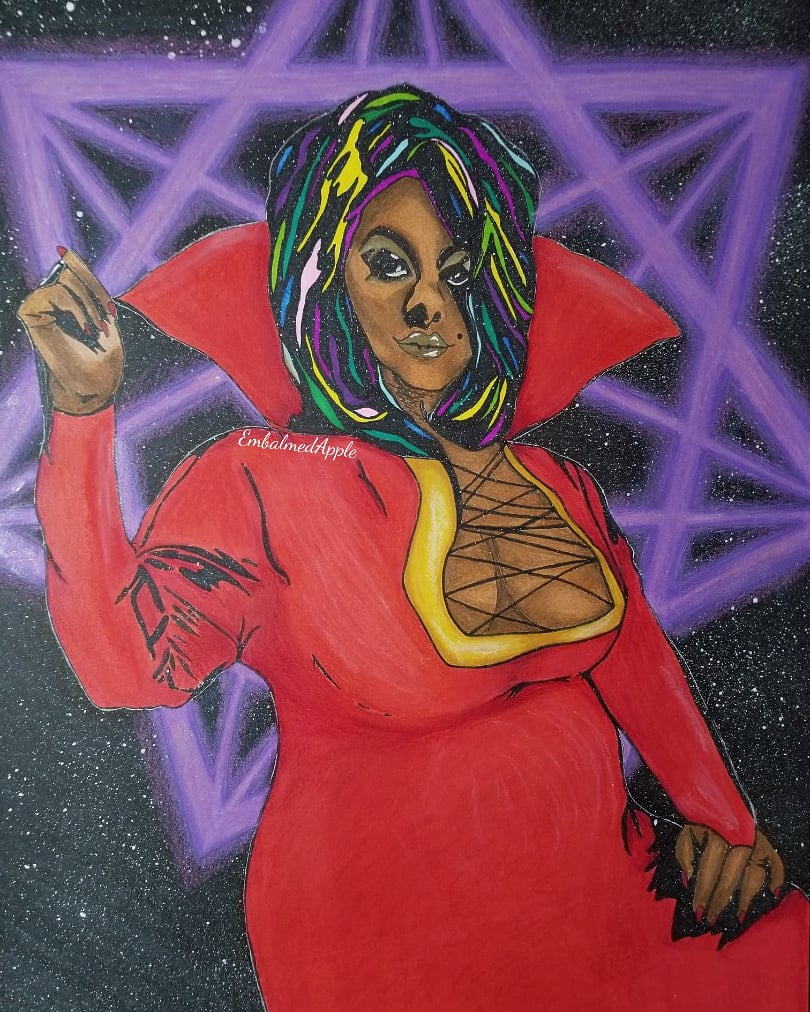
    { Pander To Thine Prejudice – By G. Antra/Embalmed Apple }

    No comments on Invoking Liber OZ:
  • The Invisible Sanctuary:

    January 8, 2026
    Basics, Ceremonial, Chaos, Rituals

    Building the Inner Sanctum

    (everything stated in this blog is based upon my own research, personal practice, and opinion)

    The idea of the astral temple keeps resurfacing across magical traditions. Not because it’s flashy, or trendy. The astral temple sticks around because it works. Quietly. Relentlessly. Often far more deeply than people expect.

    The astral temple is a sanctuary that exists beyond brick, mortar, incense smoke, and candle wax. It’s an intentionally built inner space that’s created through imagination but functions as a real, stable environment for magical work, spiritual contact, and personal transformation. You shape it with imagination, fuel it with will, and strengthen it every time you return to it. Think of it less like a fantasy palace and more like a metaphysical workshop that slowly comes alive the more you actually use it.

    Too many get tripped up right out of the gate. They hear astral and immediately assume we’re talking about escapism, daydreaming, or some woo-adjacent aesthetic exercise. This misunderstanding alone has probably kneecapped more magical practices than skepticism ever did. The astral temple isn’t a mental vacation home. It’s infrastructure. It’s where ritual coherence is built, where symbolic language gets trained into muscle memory, and where the magician learns how to hold space without relying on external props.

    I’s not “just imagination.” That phrase gets tossed around as if imagination isn’t the primary interface through which magick operates in the first place. The astral plane, however you define it within your cosmology, is the realm of thought, emotion, symbol, and archetype. It has its own logic, its own inhabitants, and its own physics. When you build a temple there with consistency and intention, you’re not pretending something into existence. You’re stabilizing a thoughtform and anchoring it within a larger psychic ecosystem. Treat it like a joke, and it behaves like one. Treat it like sacred architecture, and it starts acting accordingly.

    What makes the astral temple particularly powerful is its reliability. Physical temples are wonderful, but they’re also subject to reality. You need privacy. You need time. You need materials. You need a cooperative living situation. The astral temple doesn’t care if you’re traveling, exhausted, or living in a shoebox with thin walls. It’s always accessible. It becomes a constant point of return; a place where your magical posture stays intact even when life is messy.

    Accessibility is only part of the story. The real work begins when you realize what the act of building the temple actually trains. Visualization is disciplined imagination. It’s the ability to hold detail, maintain symbolic coherence, and sustain focus without drifting off into narrative nonsense. If your inner imagery collapses every time you look away, that’s not a personal failing, but rather it’s a diagnostic tool. The temple shows you, very clearly, where your attention fragments and where your will needs strengthening.

    Over time, the temple develops energetic density. Repetition leaves an imprint. Symbols gain weight. The space starts to feel “occupied” in the way well-used ritual rooms do. This is when the temple begins responding. Spirits recognize it. Archetypal forces behave differently within it. Your own subconscious stops treating it like a thought experiment and starts treating it like a functional environment. Astral work stops feeling abstract and starts feeling… operational.

    This isn’t a replacement for physical magic; It’s an amplifier. A parallel structure. A backstage area where you can test, refine, and rehearse without burning through materials or second-guessing every step. Rituals performed in the astral temple still register. They still affect your psyche, your subtle body, and your energetic field. In some cases, they hit harder because there’s less sensory distraction and more symbolic precision.

    One of the most underrated functions of the astral temple is how it evolves alongside you. This isn’t a static build. It’s a living structure that reflects your initiatory process whether you consciously update it or not. Doors open when something integrates. Altars change when your relationship to a force matures. Entire rooms appear after major breakthroughs. You don’t have to psychoanalyze every change, but you should pay attention.

    Traditionally, inner sanctuaries like this show up everywhere once you know how to look. Hermetic Qabalah maps reality itself as a navigable internal structure, and advanced practitioners don’t just study the Tree of Life, they move through it. Golden Dawn initiations relied heavily on imagined ritual spaces long before students were trusted with physical temple work. Tibetan Buddhism constructs entire deity palaces in meditation, complete with architectural precision, because form itself becomes a vehicle for realization. Shamanic traditions describe inner landscapes with remarkable consistency, passed down through lineage.

    This isn’t a modern invention or a New Age indulgence. It’s a cross-cultural solution to the problem of “how do you create a stable interface between the human psyche and transpersonal forces?”

    Once the temple exists, what you do with it is limited only by your discipline and symbolic fluency. Daily practice becomes possible even when circumstances aren’t ideal. Pathworking and astral travel become safer and more coherent when you’re launching from a familiar, contained environment. Spirit communication becomes clearer when meetings happen in a space that’s already attuned to your magical language. Healing work gains structure instead of dissolving into vague intention-setting. You can use the temple as a testing ground. Before performing a complex physical ritual, run it astrally. You’ll notice immediately where energy snags, where symbolism clashes, or where your confidence falters. That feedback loop alone saves an incredible amount of wasted effort.

    Building the temple doesn’t require artistic genius or encyclopedic symbolism. All it really requires is commitment. Start with a form that actually resonates with you, not one you think you’re “supposed” to use. Classical temple, forest clearing, stone hall, subterranean sanctum… it doesn’t matter as long as it feels symbolically grounded. Early on, simplicity is a strength. Overdesigning is a classic beginner trap.

    Establish basic features with intention. An altar that actually functions as a focal point. Directional markers that anchor elemental forces. Boundaries that define what belongs inside and what doesn’t. Return to it regularly. Walk through it. Interact with it. Engage your senses. Consistency matters more than intensity here.

    At some point, the temple should be inaugurated. Not because it’s dramatic, but because thresholds matter. A dedication ritual marks the space as sacred and signals to your psyche, and anything else listening, that this isn’t casual imagery anymore. From that point forward, treat it accordingly. This is not where random fantasies go to play dress-up. Maintenance is part of the work. Clean the space. Banish what doesn’t belong. Don’t let it stagnate. A neglected astral temple becomes just as useless as a neglected physical one, and often reflects the same internal avoidance patterns.

    As your practice deepens, the temple naturally expands. Libraries appear. Healing chambers form. Ancestor halls, planetary vaults, or shrines to specific forces take shape. Some additions are deliberate; others emerge after initiatory pressure reshapes your inner landscape. Let it happen, but don’t let it sprawl without coherence. Symbolic clutter is still clutter.

    One of the most important roles of the astral temple is how it forges will. Real will, not desire cosplay. Will as the ability to hold intention steady, align internal forces, and act without fragmentation. The temple gives that Will a physicality. Thought becomes architecture. Intention becomes structure. Over time, this bleeds into your outer life in ways that are impossible to fake.

    If the temple is unstable, foggy, or constantly changing without reason, that’s information. It’s showing you where your attention leaks, where your emotional regulation slips, where your symbolic language needs refinement. Fixing the temple fixes more than the temple.

    That said, this kind of work has real pitfalls. When imagination stops being disciplined, the practice slips into escapism, and the power drains right out of it. Invasive thoughtforms become more noticeable as inner perception sharpens. Stagnation sets in when people build the temple once and then abandon it. Symbolic overload happens when everything meaningful gets shoved into the same space without synthesis. None of these are moral failures, but they are maintenance issues.

    The astral temple isn’t separate from you. It’s a reflection of your internal architecture made visible. It is a fortress, a forge, a sanctuary, and sometimes a mirror that doesn’t lie. When cultivated with seriousness and care, it becomes one of the most effective tools for sustained magical work and inner transformation. The astral temple meets you exactly where your discipline is. No more. No less. It waits patiently until you’re ready to step inside and actually build something that lasts.

    ———————————————————————————-

    MONTHLY MINDFULNESS

    (From the Upcoming Walking With the Gods Icon deck – on Kickstarter in May)

    Hades

    The ancient Greek god of the underworld and ruler of the dead. Often misunderstood as a dark or malevolent figure, Hades is, in truth, a solemn and just deity who governs the realm of the afterlife with balance, order, and impartiality. As one of the three great sons of Cronus and Rhea, Hades drew dominion over the unseen world beneath the earth when the cosmos was divided.

    Though rarely worshipped in public temples, Hades was deeply respected and often invoked with reverence and caution. Known as Plouton (“the Wealthy One”) in later times, he was associated not only with death but also with the hidden riches of the earth: precious metals, fertile soil, and the mystery of regeneration. His presence signifies both finality and continuity in the eternal cycle of life, death, and rebirth.

    Hades is not a tormentor, but a guardian and keeper of souls. His realm is orderly, and he ensures that all who enter receive what is due. His myth with Persephone, whom he takes as queen, speaks to themes of descent, transformation, and seasonal change. Hades represents the sacred boundary between worlds, the still and enduring force that governs the deep mysteries of life beyond life.

    This card bring to the table the following contemplations:

    What rules, unseen, from the shadows? Acknowledge endings and continuance. The wealth you seek is hidden in shadow, and regeneration is born of stillness. Descent is initiation, and sovereignty through silence. Seek justice without favor. Fear not the threshold where life surrenders to mystery, and mystery returns as life.

    No comments on The Invisible Sanctuary:
  • Reflection & Release:

    January 1, 2026
    Basics, Rituals

    The Slow, Unsexy Work of Growing Up (Spiritually and Otherwise)

    (everything stated in this blog is based upon my own research, personal practice, and opinion)

    Everyone says they want growth. Growth sounds great. Growth looks good in bios. Growth gets applause. Growth feels like progress. Reflection? Reflection has a branding problem. Somewhere along the line, it got tangled up with overthinking, self-obsession, or that specific flavor of faux-depth where people stare at their feelings like they’re waiting for them to confess something dramatic. That’s emotional doomscrolling, not reflection. Real reflection is quieter, and less theatrical. That moment you notice a pattern and can’t unsee it. The moment you realize you’ve had the same argument in five different fonts. The moment you catch yourself reacting the same way you always do and think, “oh. There it is again.”

    Reflection isn’t about judging yourself or digging up flaws to fix. It’s about noticing how you actually move through the world when no one’s curating the narrative. What you avoid. What you cling to. What you keep calling “just how I am” even though it’s clearly costing you something. It’s not glamorous, but it’s honest. Honesty is the raw material everything else is built from. Many say they want growth, but what they really want is change without confrontation. They want insight without discomfort. They want transformation that doesn’t require admitting, even privately, that some things they’ve been doing simply don’t work anymore. Reflection interrupts that fantasy. Reflection asks you to slow down and actually look at the shape of your life. Not the version you explain to others, but the one you live in. Sometimes what you see is inconvenient. Sometimes what you see is repetitive. Sometimes it’s painfully human. That’s the point. You can’t change what you refuse to name.

    Once you start noticing patterns, release becomes unavoidable. Release gets romanticized in all the wrong ways. People talk about it like a dramatic exhale, a ceremonial purge, or a big emotional breakthrough where everything suddenly feels light and resolved. In real life, release is usually much quieter and a lot less cinematic. It’s often administrative. It’s deciding not to carry something forward because it’s heavy and no longer useful. It’s closing a tab that’s been draining your battery in the background for years. Release isn’t erasing the past or pretending something didn’t matter. It’s acknowledging that something mattered once and doesn’t need to keep steering the wheel. It’s recognizing when a belief, a habit, a role, or a story did its job and is now overstaying its welcome.

    There’s a lot of pressure to treat release like moral purification, as if letting go means you’ve transcended something, forgiven perfectly, or reached some higher frequency. That’s nonsense. Most of the time, release is just boundaries finally growing teeth. Saying, quietly, “I don’t need to keep paying for this.” A healthy spiritual life depends on that kind of discernment. Without it, practice turns into accumulation. You collect meanings, rituals, identities, and beliefs the way people collect books they swear they’ll reread someday. Eventually, it all gets heavy. Eventually, it stops breathing. Spirituality that can’t let go calcifies. It becomes rigid, defensive, and weirdly fragile. Questioning feels threatening. Change feels like betrayal. Growth starts to look like disloyalty. That’s fear, not depth. A living practice has circulation. It sheds skin. It allows things to die without turning that death into a moral crisis. It understands that what once supported you might one day restrict you. Letting go isn’t abandonment, it’s maintenance.

    Reflection and release work best together, because on their own they both get distorted. Reflection without release turns into endless self-analysis. You notice everything and change nothing. You become very insightful and very stuck. Release without reflection turns into avoidance. You let go of things before you understand them, and they quietly reappear later wearing a different name. When they work together you notice what’s actually going on, then you choose what you’re no longer willing to carry. That choice doesn’t always feel dramatic. Most of the time it shows up in small, almost boring ways. You pause before reacting. You stop overexplaining. You don’t chase the same emotional loops. You rest earlier. You let silence do some of the work. This is the part we don’t glamorize because it doesn’t photograph well. Integration isn’t loud. It doesn’t announce itself. It just quietly rearranges your internal furniture, so you stop tripping over the same things.

    Dismantle the idea that growth means constant motion. Constant healing. Constant becoming, as if you’re a project that’s never allowed to be finished. That mindset burns people out fast. It turns self-awareness into surveillance and spirituality into a performance review. Sometimes the most mature thing you can do is stop digging and let what you’ve already learned settle into your bones. There are seasons for excavation and seasons for inhabiting what you’ve uncovered. You’re allowed to stabilize. You’re allowed to plateau. You’re allowed to rest inside your own progress without immediately trying to transcend it. Reflection, at its healthiest, becomes less like interrogation and more like conversation. You learn your own rhythms. You recognize when you’re acting from fear, when you’re tired, when you’re avoiding something, and when you’re actually okay. You stop treating every uncomfortable feeling as a problem to solve and start treating it as information. That builds trust with yourself. Real trust that doesn’t need constant external validation or spiritual theatrics to hold together.

    Release flows naturally from the trust in self. When you know you won’t abandon yourself, letting go stops feeling like a threat. You don’t cling as hard. You don’t force things to stay meaningful past their lifespan. You can say, without bitterness or drama, “This mattered, and now it’s complete.” That’s not cold. It’s respectful. Growth isn’t about becoming someone unrecognizable. Growth is about becoming less tangled. Growth is about becoming less burdened, and reactive. It’s about becoming more honest. More present. More capable of choosing instead of defaulting. It’s not flashy. It doesn’t come with a soundtrack. It doesn’t need an audience. It just quietly changes how you move through your days. You notice when something doesn’t fit anymore. You loosen your grip. You keep going… a little lighter than before.

    That’s the work. Not dramatic. Not performative.
    Just real, lived, ongoing human becoming.


    Mirror of Release

    (This is a less personalized version of a ritual I perform every season. )

    Materials:

    A mirror (bathroom, compact, or black mirror/dedicated magick mirror if you’re fancy like me)

    One candle (any color; intention > aesthetics)

    Something to write with

    2 scraps of paper you don’t mind destroying

    At least 5 uninterrupted minutes (yes, really)

    Ritual:

    Light the candle. Look into the mirror; into your own eyes, and see yourself, accurately. Truthfully. No gloss, no blinders…

    Say out loud, with confidence:

    “I’m here to see what’s real, not what’s comfortable.”

    Hold your own gaze and answer these out loud:

    What did I avoid this year because it scared me? (your answer)

    What did I keep doing that I know doesn’t work? (your answer)

    Where did I betray my own energy, time, or values? (your answer)

    What part of me is tired of pretending this is fine? (your answer)

    No self-flagellation. This isn’t a confession, it’s an internal inventory.

    On one of the pieces of paper, write one sentence that captures the pattern you’re done carrying.
    Example: “I keep over-giving so I don’t have to ask for what I need.”

    Look back into the mirror and say confidently:

    “I see who I’ve been. I choose who I’m becoming.”

    Burn the paper and release it’s hold on your mind. Let it go for it no longer serves you.

    Hold your own gaze and answer these out loud:

    What would future-me thank me for starting now? (your answer)

    What boundary, habit, or truth actually changes the trajectory? (your answer)

    On the other piece of paper, write one clear, doable commitment. Not a glow-up fantasy. A commitment you can accomplish with a bit of applied awareness.

    Example: “I stop explaining myself to people who benefit from misunderstanding me.”

    Hold the second statement to the mirror with your projective* hand and say confidently:

    “Witness this.”

    Read your commitment out loud.

    Blow out the candle and say confidently:

    “I walk forward with my eyes open.”

    Keep your commitment somewhere you can revisit it in times of indescision. Burn it, without ceremony, once it’s job is complete.

    **Projective hand – the hand you would default to for holding a wand, and/or the side you use to send energy.

    No comments on Reflection & Release:
  • The Fallow Season:

    December 22, 2025
    Basics, Community

    What Death Teaches Us About Being Alive

    (everything stated in this blog is based upon my own research, personal practice, and opinion)

    No one really talks about how walking closely with death makes life louder. Not gentler. Not softer. Louder. Laughter lands heavier in your chest. Warmth feels startling. Joy can sting, like your body isn’t sure it’s allowed to hold that much aliveness at once. Once you’ve spent time with death’s silence, really sat with it, listened to it, everything that still moves feels electric by comparison.

    That’s why I talk about death the way other people talk about the weather. Not to be shocking. Not to be grim. Death changes how you see things. You don’t stand at the edge of endings and come back looking at the world the same way. Blooming flowers stop being decorative and start feeling defiant. Breath stops being automatic and starts feeling sacred.

    In my personal practice, I work with death energies and death-aligned entities. I work with psychopomps, and with their crossroads aspect. The guides, the carriers, the ones who walk with souls at thresholds. I spend time in liminal spaces, where something is no longer alive as it was, but not fully gone either. The places in between, where change hasn’t settled yet, and choice still hums in the air.

    Late autumn into winter makes people deeply uncomfortable. Spring sells hope. Summer sells confidence. Autumn gets an aesthetic. The fallow season, the stretch where everything looks like it’s dying, doesn’t perform. Trees stop trying to impress you. Flowers disappear without apology. The earth stops producing and starts resting. Rotting. Becoming quiet. The world exhales, and if you let yourself follow its lead, so do you.

    We humans, hate that. We hate stillness. We’ll scroll ourselves numb rather than sit long enough to notice the hollow places inside us. Empty feels too close to dead… and dead is a word everyone pretends to understand until it gets uncomfortably close.

    There’s a strange peace in this season. Not the polished kind sold as self-care, but the muddy, compost-scented kind. The kind that reminds you rest is not failure, and decay is not the enemy. Sometimes things have to die, or they rot from the inside instead. You are not meant to bloom all year.

    Death, physical/spiritual/seasonal, is the most honest teacher I’ve ever encountered. It doesn’t flatter you. It doesn’t negotiate. It doesn’t care about your plans, your productivity, or how well you’re performing “having it together.” Death asks one question, over and over: Did you live while you were alive? Not “did you achieve things.” Not “did you stay busy.” Did you actually inhabit your life? Did you feel your body, your breath, your relationships? Did you notice yourself being here?

    Standing near endings changes how you answer that. When you truly sit with the reality that things end, your own breath suddenly feels louder. Stranger. Sacred. Sometimes miraculous. Sometimes uncomfortable. Often both.

    The winter solstice marks the official beginning of the fallow season. The time when the world grows quiet and cold and looks, at first glance, like nothing is happening. I love it because it’s honest about emptiness. It doesn’t distract you or dress endings up as something else. Leaves fall. Fields go bare. Soil stops producing. Everything says, “Pause.” Not forever. Just now. When you unclench, slow down, and let yourself feel the ache of what you’ve lost instead of immediately fixing it. When you stop resisting, something shifts.

     People think death work is only about grief. Grief is part of it, yes. There’s also absurdity, tenderness, dark humor, and a joy that feels almost rebellious. Not the joy of perfect circumstances, but the joy that shows up when you realize life is fragile, unfair, temporary, and still so beautiful it makes your chest ache.

    Death doesn’t remove beauty. It sharpens it. It teaches you to pay attention. You start noticing how warmth feels in your hands. How someone’s laugh changes when it’s genuine instead of polite. The hush before snow falls. The smell of cold earth after rain. The quiet intensity of someone really listening. The sound of your own heartbeat when the world is asleep.

    When I work with death energies, when I stand at crossroads with beings who understand the weight of endings, they don’t tell me to be fearless or enlightened or wise. They tell me to wake up. To stop treating life like a rehearsal I’ll get to redo later. They don’t ask me to stop fearing death. They ask me to stop being afraid of life. That’s why the fallow season feels like an invitation instead of a threat. It whispers, “Come sit with what’s ending.” Not to fix it. Not to rush through it. Just to witness.

    Stillness is uncomfortable. That’s why we stay busy. Busy is armor. Busy keeps you from noticing the loneliness under your ribs, or the way your days have started to blur together. Busy keeps you from admitting you’re tired of pretending. The earth isn’t afraid of endings. It doesn’t cling to summer. It lets leaves fall without drama. Then it does something deeply patient… it turns what died into soil. Into nourishment. Into the conditions for spring. We keep trying to skip that part. We want harvest without winter. Rebirth without decay. Transformation without letting anything die first. Spiritually? Emotionally? Magically? That’s not how it works.

    The world runs on cycles, not straight lines. No spell, no ritual, no manifestation practice will spare us grief, loss, or endings. Those aren’t mistakes. They’re nature.

    Crossroads are messy places. They’re not beginnings or endings. They’re both and neither. They’re transition. Choice. The held breath between steps. In journey work, I often find myself standing there, and death doesn’t always appear as something grim or ominous. Sometimes it feels like quiet hands. Like someone turning down the noise so you can finally hear yourself again. That silence feels like kindness.

    We’re taught that life and death are opposites. I don’t believe that. I think the opposite of death is denial. Numbness. Refusing to feel. Real life, life that warms your chest and makes your teeth hurt a little, only shows up when you stop running from what scares you.

    Which brings me back to the fallow season. This season isn’t dead. It’s preparing. Under frozen ground, seeds are holding their breath. Roots are conserving strength. Animals burrow down not because they’re weak, but because they’re wise. The world isn’t gone. It’s gathering itself.

    What if humans did the same?

    What if rest wasn’t punishment?

    What if quiet wasn’t failure?

    What if you let part of your life go fallow, not permanently, just long enough to breathe?

    Living in alignment with death (seasonally, spiritually, magically) doesn’t make you morbid. It makes you grateful in a way nothing else does. You realize joy doesn’t have to be loud, it just has to be real. You learn that some things can end and still be sacred. That some doors close because you’re meant to walk somewhere darker and deeper before the path rises again. That love hurts precisely because everything ends, and that’s also what makes it precious. Death work doesn’t make you fearless. It makes you brave enough to love things you know won’t last.

    Working with death-aligned energies taught me that these forces aren’t interested in fear or worship. They’re interested in truth. They don’t ask you to bow. They ask you to notice that you’re still breathing and not waste it. When I journey with them, I don’t come back with “everything will be fine.” I come back with something truer, “everything ends”, and that’s why it matters. Strangely, that makes life feel softer. Not easier… softer. Like something worth touching instead of rushing past. We resist that wisdom. We want to be spring all the time. Blooming. Thriving. Producing proof we’re doing life correctly. Nothing in nature functions that way. Perpetual summer is a desert. Endless blooming is rot. Even stars collapse.

    Why do we think we should be different?

    This is why burnout happens. Why people feel hollow even when their lives look fine. Why grief hits like a truck. We were taught to love what stays, not what ends. Death work, winter, and decay teach you how to love things because they end. Loss still hurts, but it hurts cleaner. Not festering, but rather in a way that cracks you open and lets more light in. Death made me fall in love with life. Not because it’s pretty, but because it’s temporary. That’s what makes it sacred.

    The fallow season offers permission. Permission to not be blooming. To lay down what’s heavy. To let exhausted parts of yourself die. Permission to not be useful, impressive, or “on.” Permission to rest without earning it. You are part of nature too, and nature rests. If death has taught me anything, it’s that life isn’t something you can hoard. You can only live it now, messily, honestly, with dirty hands and laughter that sometimes sounds like crying.

    When things go quiet inside you, don’t panic. You’re not broken. You’re in a season. Let yourself be fallow. Sit with what’s ending. Bury what’s dead. Light a candle for who you used to be. Stand at the crossroads without rushing through it. There are lessons in thresholds you can’t learn anywhere else.

    When the frost melts, when the light returns, when something small inside you stirs and whispers “maybe,” you’ll rise. Not because you forced yourself to, but because you honored the dying first.

    Death isn’t the opposite of life. It’s what shapes it.

    Life is a miracle, not because it lasts forever, but because it doesn’t.

    Blessed Solstice to you all!

    No comments on The Fallow Season:
1 2 3 … 5
Next Page

Blog at WordPress.com.

The Art of Becoming

A new approach to magick

    • About


Loading Comments...
 

    • Subscribe Subscribed
      • The Art of Becoming
      • Already have a WordPress.com account? Log in now.
      • The Art of Becoming
      • Subscribe Subscribed
      • Sign up
      • Log in
      • Report this content
      • View site in Reader
      • Manage subscriptions
      • Collapse this bar